Rethinking Inclusion: Addressing Systemic Barriers for Neurodivergent Teaching Professionals
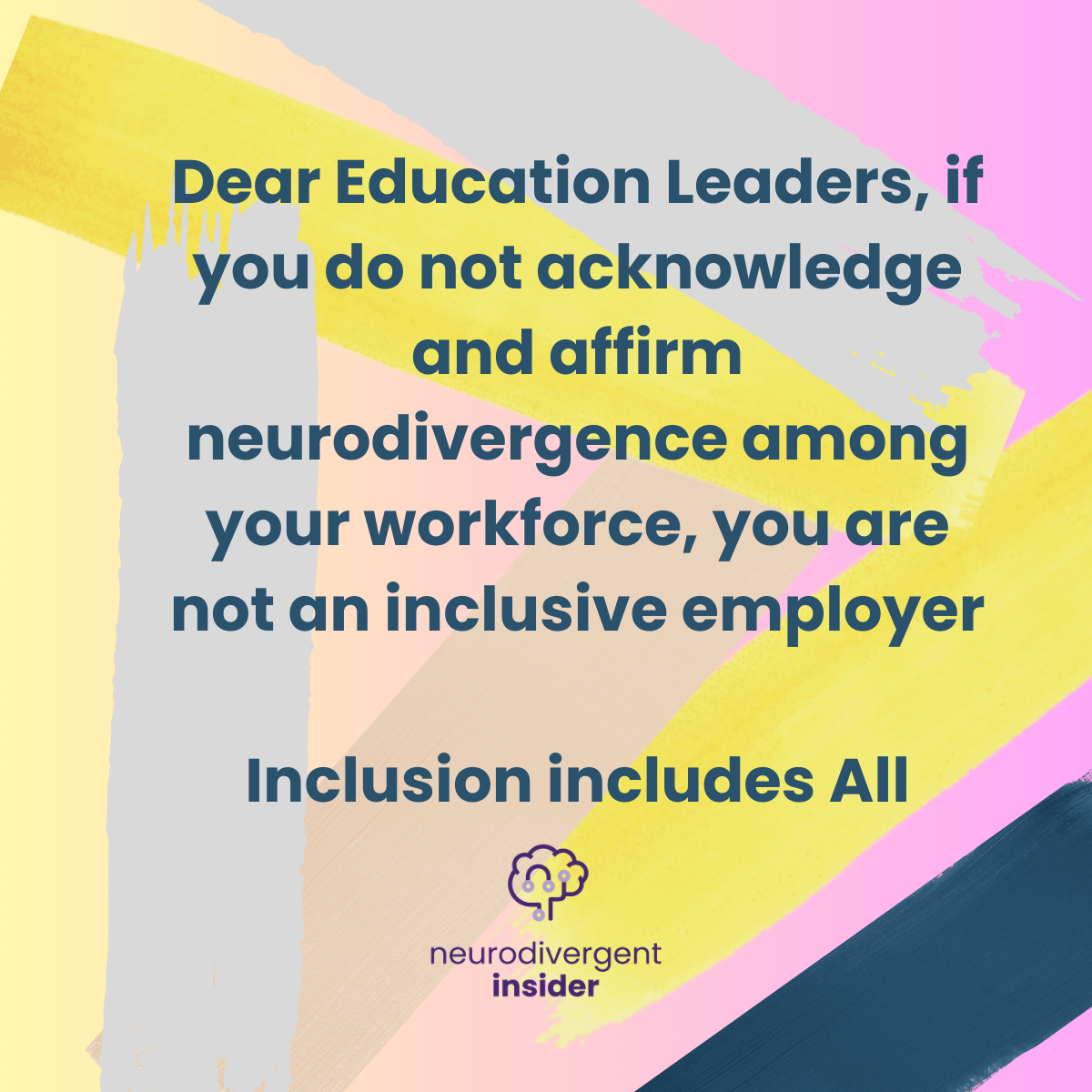
Dear Education Leaders…
As the new academic year commences, it is an appropriate moment to reflect on the ongoing challenges facing neurodivergent professionals in education. Over five years ago, my doctoral research explored the experiences of neurodivergent teachers and uncovered a persistent gap between policy aspirations and lived reality. Unfortunately, many of these challenges remain unchanged today.
Key Findings from the Research
The study revealed several structural barriers that continue to shape the working lives of neurodivergent educators:
Intent without understanding: While many institutions expressed willingness to support neurodivergent staff, there was limited knowledge of neurodivergence and how to provide appropriate accommodations.
Inappropriate transfer of support models: Adjustments for staff were often borrowed directly from learner-focused frameworks, resulting in clumsy or ineffective provision.
Ambiguity surrounding the Equality Act (2010): Despite its legal protections, there was widespread uncertainty among educational leaders regarding its application to neurodivergent employees.
Neuronormative pressures: Teachers reported feeling compelled to conceal or suppress aspects of their neurodivergence in order to conform to “expected” professional norms.
Systemic failure of recognition: At an institutional and sector-wide level, there was insufficient acknowledgement of neurodivergence within the workforce and a lack of proactive strategies to address this reality.
Why This Matters
These findings highlight that the barriers faced by neurodivergent staff are not the result of individual deficits, but rather systemic shortcomings. While there are examples of promising practice, these remain isolated rather than embedded. The persistence of these issues demonstrates that inclusion has yet to be meaningfully realised for staff, despite its increasing prioritisation for learners.
Towards Systemic Change
For the education sector to fulfil its role as a leader in equity and inclusion, a shift in perspective is required. Piecemeal adjustments or individual accommodations are insufficient. Instead, what is needed is a systemic reconfiguration of how neurodivergence is understood, supported, and valued within the teaching profession.
Such change would not only benefit neurodivergent educators, but also enrich learning environments for all students. Research suggests that workplaces designed with neurodivergent staff in mind often lead to broader improvements in flexibility, communication, and wellbeing across the organisation. In other words, inclusive practice generates collective benefit.
A Call to Leadership
The education sector has a unique opportunity to move beyond compliance and towards meaningful transformation. To do so requires leaders who are willing to interrogate current systems, challenge neuronormative assumptions, and embed inclusive design into the very fabric of their institutions.
If you are an education leader committed to building a genuinely inclusive environment, I invite you to connect.
📧 Email: a.odwyer@neurodivergentinsider.co.uk
Inclusion must extend to all members of the educational community — including those who teach within it.